

When I look at a gaming convention floor plan, I see two booths that can have the same dimensions and very different price tags. One sits halfway down an aisle. The other catches visitors coming from two directions. That difference is a good starting point for anyone asking how do gaming conventions make money from exhibitors.
Organizers rent booth space, charge premiums for certain locations, and sell sponsorships and promotional upgrades. Some also charge for services or negotiate a share of vendor sales. To understand what the convention earns, follow each payment from the exhibitor to whoever collects it.
Booth Rentals Generate Revenue Before the Doors Open
A convention can sell floor space by booth size, by area, or as part of a package. A standard inline booth typically faces one aisle. Corner booths open onto two aisles, endcaps occupy the end of a row, and island booths can be approached from all sides. Those layouts give organizers several ways to price the floor.
Why two booths of the same size can cost more or less
Imagine a 10 × 10 inline booth priced at $500 and a same-size corner booth priced at $800. The organizer collects $300 more for the corner, where a vendor can display products toward two aisles or give players another way to approach a demo.
Organizers can also set aside space at a lower rate for eligible indie studios. An indie booth and a standard booth might have the same footprint but come with different eligibility rules, locations, or inclusions. A dedicated indie area gives smaller teams a way to exhibit and gives attendees a place to discover games they might otherwise miss.
What Exhibitors Pay for Beyond Floor Space

If you’re asking how do gaming conventions make money from exhibitors, look at what comes with the booth. One package might include a table, chairs, and two exhibitor badges. Another might provide an empty footprint and offer furnishings, extra badges, or electricity separately. For a studio running multiple demo stations, power and internet can matter as much as the booth’s location.
Who gets paid for equipment and services?
The exhibitor agreement and service order forms show who collects each fee. The organizer might sell extra badges directly, while the venue or an approved contractor bills for power, freight handling, internet, or booth installation. Exhibitors may also pay hotels, shippers, and equipment suppliers directly.
An exhibitor can spend thousands preparing for a show while the convention collects only the booth fee and a few upgrades. Itemizing the bill makes it possible to tell how much the organizer actually earns from the booking.
How Conventions Sell Sponsorships and Advertising
A booth gives exhibitors a place to meet attendees. Sponsorship lets them reach people elsewhere at the event. An organizer might sell a livestream ad, a newsletter placement, branding on the main stage, or naming rights for a playtest area. A publisher launching a game could rent demo space and pay separately to promote the launch to viewers watching from home.
Sponsorship packages and individual upgrades
An organizer can bundle several placements into one package or sell them individually. A hardware company might sponsor a demo zone and supply peripherals for players to try.
A smaller studio might buy a single newsletter placement that tells attendees when and where they can play its game. Sponsorship fees can help cover the cost to host a local gaming tournament, while donated or loaned equipment can reduce what the organizer needs to buy or rent.
Some sponsorships include floor space. Others can be purchased independently. The agreement should specify what the sponsor receives, including where its branding appears and how many promotional placements are included.
Why Gaming Companies Pay to Exhibit
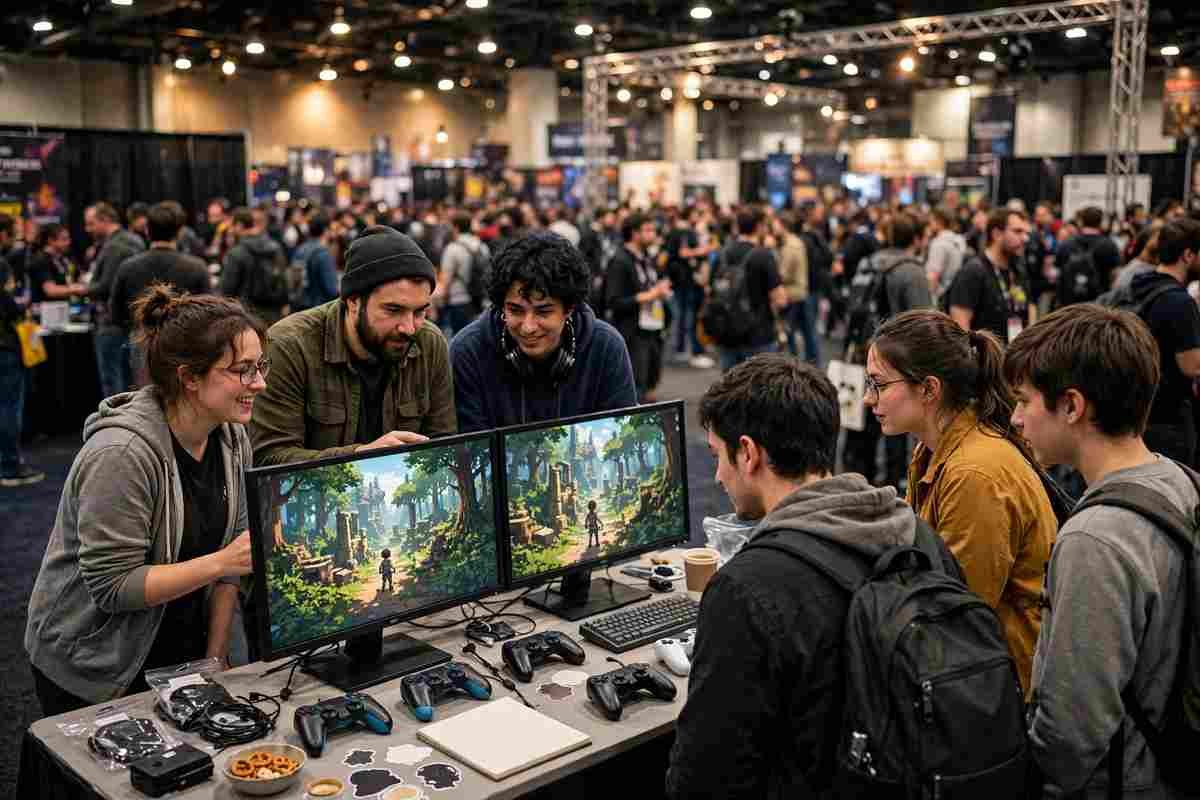
A tabletop publisher can teach visitors a game and sell copies on-site. An indie developer with an unreleased title might use the same space to collect feedback and drive wishlists. A larger publisher could book a booth for hands-on previews and schedule press appointments around it.
Those goals influence which upgrades are worth buying. Extra floor space can give a popular demo room for a queue. A sponsored stage slot can help a studio reach attendees who never walk past its booth. A trade-focused exhibitor might get more value from scheduled meetings with distributors or retailers.
How Much Can a Convention Earn From Exhibitors?
Here’s one way to answer how do gaming conventions make money from exhibitors using a hypothetical event. Suppose it sells 30 standard booths at $500 each and 10 corner booths at $800 each. That brings in $15,000 from standard booths and $8,000 from corners. Two $2,000 sponsorships bring the combined gross revenue to $27,000.
The organizer still has to cover costs such as venue rental, event staffing, security, and production. The example also assumes every booth sells at its listed price. Discounts, unsold spaces, and sponsorship commitments all affect how much money the event keeps.
Frequently Asked Questions
1. How do gaming conventions make money from exhibitors?
They rent booth space and may charge extra for premium locations, additional badges, or promotional placements. Sponsorships can generate more revenue by giving companies visibility across the venue, livestream, or event communications.
2. Do gaming conventions take a cut of exhibitor sales?
It depends on the vendor agreement. Some events use a flat rental fee. Others can require a share of sales, either on its own or alongside a booth fee. Check the agreement for any percentage charge and how sales must be reported.
3. What does a gaming convention booth fee include?
It can cover floor space, exhibitor badges, basic furniture, or Wi-Fi. Inclusions vary by event and package. Confirm power, shipping, and setup fees before comparing booth prices.
4. Can a company sponsor a convention without renting a booth?
Yes, when the organizer sells sponsorship separately. A company could sponsor a livestream, newsletter, stage, or activity area without booking a physical display.
What the Booth Price Really Tells You
When I want to understand a convention’s exhibitor business, I start with the floor plan and then read the order form. The floor plan shows what makes one spot more valuable than another.
The order form shows what the exhibitor gets, which upgrades cost extra, and who collects each payment. Together, they tell me how the organizer earns money from the show floor and the audience it brings in.