

When I see five players lift a trophy behind a giant check, I want to know how much of that money each person actually earns. The first question I ask is how is esports prize money split between players and teams? The tournament sets the award for each finishing position. Its rules may list a separate reward for the organization, while the team agreement can determine how the applicable prize is divided among eligible players and staff.
For example, five players could each earn $16,000 from a $100,000 placement award if their agreement gives the roster 80% in equal shares. Change the agreement or the number of eligible recipients, and the individual payout changes too.
How an Esports Prize Pool Becomes a Team Payout
The advertised prize pool covers the awards available across an event. The winner earns the first-place award, while runners-up and other eligible finishers receive the amounts listed for their placements. Some club championships also advertise a combined total that includes a separate club reward. Before dividing anything by five, check what the headline figure includes.
Three numbers matter: the total available across the event, the award tied to the team’s finish, and the portion eligible for sharing under the event rules and team agreement. A $1 million event can have a $100,000 award for a particular finish. For that roster, the calculation begins with the $100,000 award and its payment terms.
Who Decides How Much the Organization Keeps?
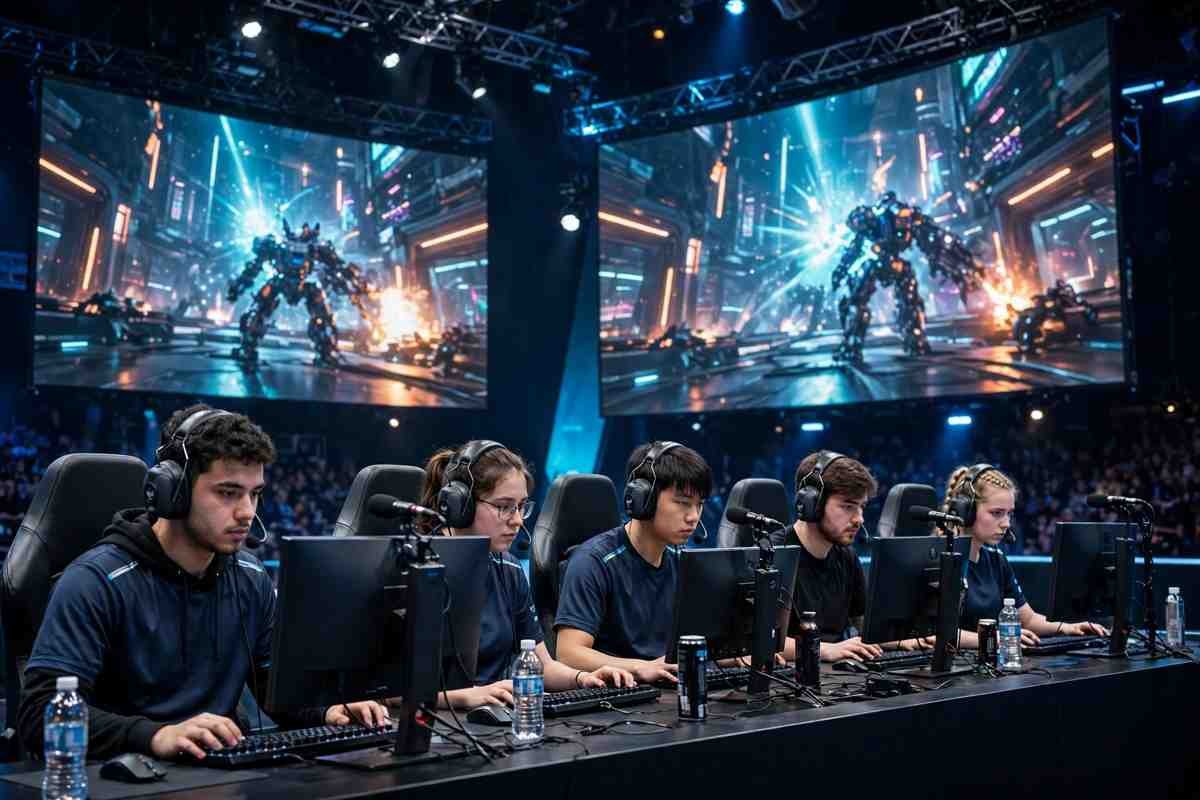
To answer how is esports prize money split between players and teams for a specific roster, start with the tournament rulebook. It identifies the award categories, determines who can receive payment, and may set requirements for sharing the prize. Then check the team agreement for any organization percentage and the formula used to divide the roster’s share.
The payment recipient and the people entitled to a share can be different. An organization may receive the award and then distribute the agreed amounts to players. An unsigned roster may need to nominate a recipient under the event rules and agree in advance on how that person will distribute the money.
What a $100,000 Award Could Pay Each Player
Five starters with an equal split
Suppose a team earns a $100,000 placement award. Its agreement gives the organization 20% and allocates the remaining 80% to five eligible players equally. The organization receives $20,000, leaving $80,000 for the roster. Each player’s gross share is $16,000 before any applicable withholding or payment charges. The 80/20 split is an example of a contract arrangement.
What changes when a substitute or coach qualifies?
If a substitute qualifies for an equal share of the same $80,000, six people would receive about $13,333 each. A different agreement could give that substitute a fixed amount or tie their share to participation. Coaches may receive an agreed prize share or a separate performance bonus. Whether that amount comes from the roster allocation or a separate payment determines how much remains for the players.
How Real Tournaments Account for Club Rewards

The 2026 BLAST Dota Slam payout schedule lists $750,000 in prize money and $250,000 in team earnings across its $1 million pool. For first place, the schedule lists $300,000 in prize money and $100,000 in team earnings. Anyone starting with the combined $400,000 figure needs to check which category feeds into the player-share calculation.
The 2026 ESL Pro Tour used different allocations across events. IEM Krakow listed $1 million in prize money and a $250,000 club reward. IEM Atlanta listed $300,000 in prize money and a $700,000 club reward. The IEM Cologne Major listed $1.25 million in prize money and a $0 club reward. Those figures show how the organizer categorizes each event’s payouts. The individual shares depend on the rules and agreements that apply to each roster.
What a Public Prize Figure Can Tell You
When fans ask “how is esports prize money split between players and teams,” the public payout table usually answers the first part of the calculation by showing what the roster earned for its placement.
To estimate one player’s gross share, you also need the applicable percentage, the number of eligible recipients, and any agreed adjustments for staff or substitutes. Since esports teams make money beyond tournament winnings through sources like sponsorships and merchandise, the payout table shows only what the team earned from that event.
Payment timing is another detail worth checking. An event may verify results or collect payment paperwork before releasing funds, and a team agreement may specify when the organization must distribute the shares after receiving payment. Currency conversion, transfer charges, and applicable withholding can also affect what arrives. Salary, sponsorship income, and streaming revenue are separate sources of earnings, so a public list of tournament results captures only the competitive prize side of a player’s income.
Frequently Asked Questions
1. In a five-player tournament, how is esports prize money split between players and teams?
The event sets the placement award and any separate club reward. The event rules and team agreement then determine the organization’s share, if any, and how the remainder is allocated. An equal five-way split applies when five players qualify and the agreement gives them equal shares.
2. Do esports players get paid directly by the tournament?
The rules identify the payment recipient. An organizer may pay a registered team entity or designate another eligible recipient. If the organization receives the prize, the applicable rules and agreements determine its responsibilities for paying players.
3. Does a substitute get prize money for playing one match?
A substitute can qualify if the event rules and team agreement allow it. The agreement may set a minimum participation requirement, grant a fixed amount, or provide a full share to anyone who plays. One appearance can produce different payouts under different terms.
The Bottom Line
I start with the official placement award, then check whether the organizer lists a separate club reward. From there, I look for the agreed roster percentage and count everyone who qualifies for a share. If those terms are private, I treat any per-player figure as an estimate. That gives me a better way to read the next giant check I see onstage.