

It’s getting harder to notice anything quiet in a gaming landscape that runs on sequels, reboots, and billion-dollar marketing cycles. Every year, genuinely thoughtful games slip through simply because they don’t shout the loudest. What’s interesting is that many of these overlooked titles don’t just survive, they build small, loyal audiences who keep playing, recommending, and revisiting them long after release.
Across the United States, players consistently talk about the same feeling with these games. They didn’t expect much going in, but the experience stuck. Sometimes it’s a mechanic that feels new. Sometimes it’s tone, restraint, or emotional weight. These are not games chasing trends. They’re games that trust the player, and that trust shows.
Why Some Games Stay Underrated Even When Players Love Them
A game doesn’t need to fail to be underrated. Many of these titles review well and generate strong word-of-mouth, but they release in crowded windows or live outside familiar genres. In the gaming industry, especially, discoverability often depends on streaming visibility and franchise recognition, which leaves quieter experiments behind.
What separates these games is not polish alone, but intent. They are comfortable being specific. That specificity, whether cultural, emotional, or mechanical, is often what turns casual players into advocates.
Hidden Gems That Players Keep Recommending
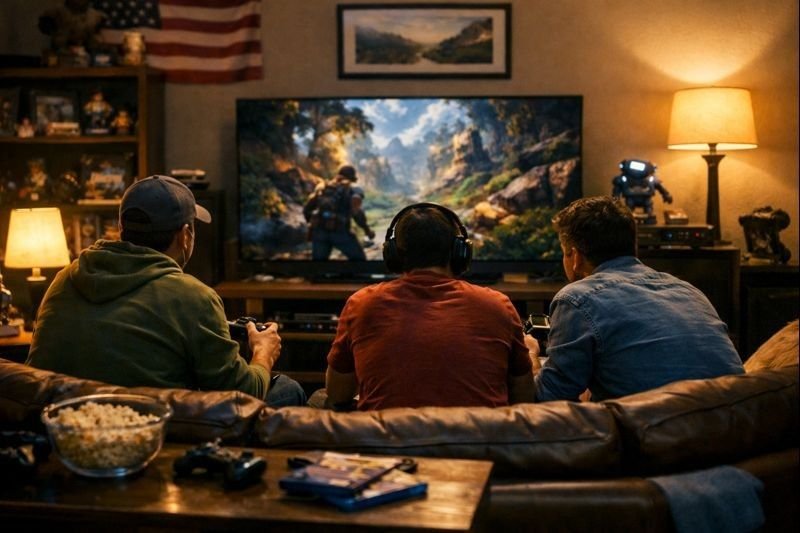
Several newer releases from the last two years have developed strong followings without ever becoming mainstream conversation pieces.
Clair Obscur: Expedition 33 stands out for its rhythmic combat system that rewards timing rather than raw stats. Its Belle Époque-inspired world feels unusual in a genre dominated by fantasy tropes, and players who stick with it often cite how tactile and deliberate the battles feel.
The Alter takes a psychological angle rarely seen in survival games. Managing alternate versions of the same person sounds abstract on paper, but in practice, it forces players to confront regret, identity, and consequence in a way that feels deeply personal.
Blue Prince earned a reputation in indie circles for its shifting mansion layout and room-drafting mechanics. Each decision subtly reshapes the experience, making exploration feel intentional rather than random.
Atomfall avoids spectacle in favor of tension. Its emphasis on stealth and scarcity resonates with players who prefer atmosphere over constant combat, especially those burned out on power-fantasy shooters.
South of Midnight brings a striking visual identity and narrative focus rooted in Southern folklore. Its exploration of grief and heritage gives the game emotional weight that lingers beyond the credits.
Eternal Strands quietly impresses through creative problem-solving and destructible environments. Players often describe moments where experimentation feels more rewarding than optimization.
Overlooked Modern Games That Aged Better Than Expected

Some games become underrated not because they are new, but because they were misunderstood at launch. These titles are often rediscovered through recommendations rather than marketing.
Vampyr remains one of the strongest examples of consequence-driven storytelling. Every choice alters the city’s ecosystem, and players who engage deeply often describe it as emotionally exhausting in the best way.
Sleeping Dogs continues to earn praise for its combat and grounded storytelling. Many players argue that it still outperforms newer open-world games in terms of flow and pacing.
Spec Ops: The Line has gained renewed attention for its refusal to glorify violence. Its narrative discomfort remains rare in the shooter genre.
Marvel’s Midnight Suns surprised players with its depth. Those who moved past initial skepticism often found one of the most satisfying tactical systems of the last decade.
Niche Indie Titles That Prioritize Feeling Over Flash
Smaller studios continue to release games that trade spectacle for intimacy, and indie players are often the first to champion them.
The Séance of Blake Manor uses a stylized comic presentation to tell a grounded mystery. Its pacing rewards patience, not speed.
Despelote focuses on memory and place rather than objectives. Players often describe it as quietly moving, especially for how little it asks mechanically.
Birdcage channels classic arcade design while still feeling modern. Its difficulty curve appeals to players who miss tightly focused challenges.
What These Games Have In Common
Despite their differences, these games tend to share a few traits that explain why players bond with them:
- They respect player intelligence and curiosity
- They take creative risks without over-explaining themselves
This restraint often creates stronger emotional engagement than games that try to appeal to everyone at once.
Frequently Asked Questions (FAQs)
1. Are Underrated Games Usually Indie Titles?
Not always. While many underrated games come from smaller studios, several mid-budget and even AAA releases become overlooked due to marketing timing or genre expectations.
2. Why Do Players Often Discover These Games Late?
Visibility is heavily influenced by streaming trends and franchise familiarity. Games outside those lanes rely more on word-of-mouth, which takes time.
3. Are Underrated Games Less Polished Than Popular Ones?
Polish varies. Many underrated games are mechanically solid but prioritize mood, experimentation, or narrative depth over visual spectacle.
4. Do Underrated Games Have Better Replay Value?
Often, yes. Because they focus on systems or choice-driven design, many players return to them multiple times in ways that feel meaningful rather than repetitive.
Final Thoughts
Underrated games tend to reward curiosity. They don’t demand attention, but they earn it slowly, through trust and consistency. In a market saturated with familiar formulas, these titles stand out precisely because they feel personal. Players don’t just finish them, they remember them, recommend them, and quietly defend them when lists overlook their impact.
Sometimes the most satisfying gaming experiences are the ones you stumble into without expectations and leave thinking about weeks later.