
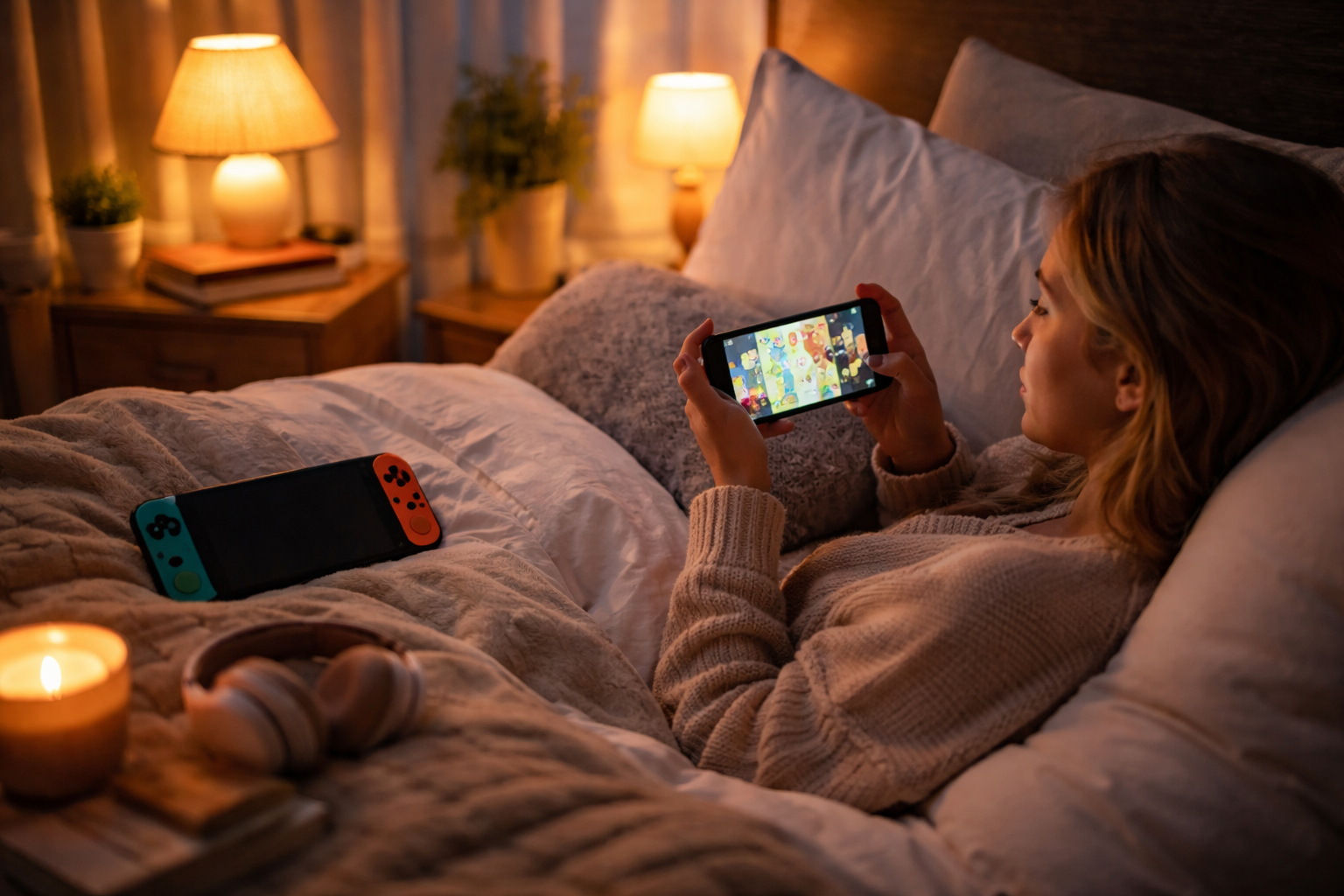
Most nights, the hardest part of sleeping isn’t exhaustion; it’s shutting your brain up. Even when the day ends, thoughts linger. Scrolling makes it worse, and shows often keep the mind alert instead of calm. That’s where certain games quietly work better than expected.
Games to unwind with before bed don’t excite you. They slow you down. When designed well, they replace mental noise with simple, repeatable actions that gently pull your focus away from stress. Over time, they can become part of a wind-down routine that feels natural instead of forced.
Why Low-Pressure Games Calm the Mind at Night
The key difference between relaxing games and stimulating ones isn’t graphics or popularity, it’s pressure. When a game removes failure, timers, and competition, the brain stops anticipating outcomes and starts resting.
Repetitive mechanics matter more than challenge. Actions like placing objects, walking through quiet spaces, or completing small tasks give the mind something predictable to hold onto. That predictability interrupts racing thoughts without demanding problem-solving.
Sound and pacing also play a role. Soft music, ambient noise, and slow transitions help reduce sensory overload, which is especially important late at night.
Cozy Games That Naturally Fit Bedtime Play
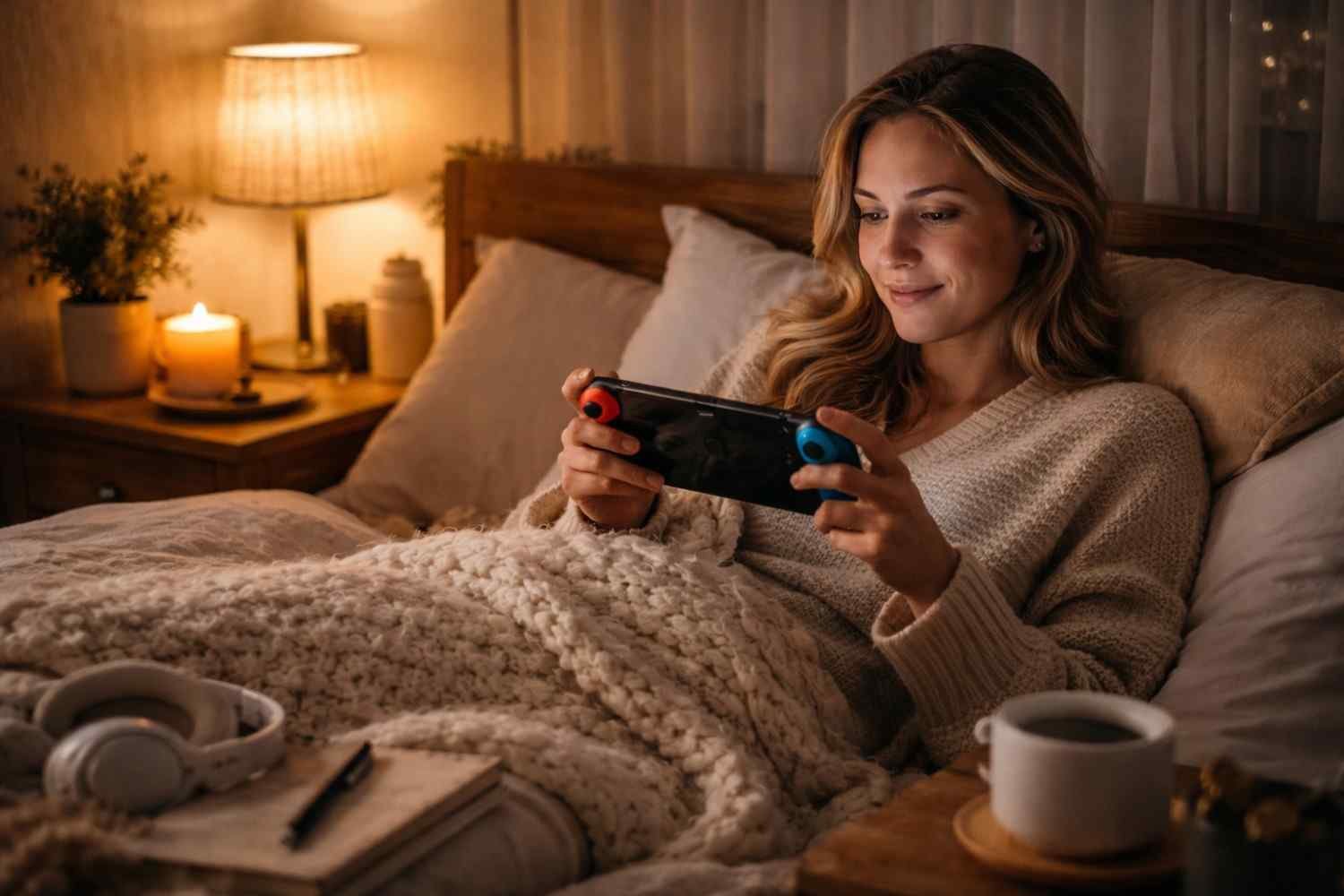
These games work well because they respect your pace and don’t punish you for stopping whenever you want.
Games that feel calm and routine-friendly:
- Stardew Valley
- Animal Crossing: New Horizons
- Unpacking
Stardew Valley feels grounding at night because you can focus on one gentle activity at a time, fishing, farming, or simply walking around. Animal Crossing leans into comfort even more, turning small island chores into relaxing rituals. Unpacking removes pressure entirely, letting you organize items with no right or wrong outcome.
Gentle Exploration and Emotional Comfort Games
Some games help you unwind not through repetition, but through atmosphere and emotional warmth.
Games that emphasize peaceful exploration and connection:
- A Short Hike
- Spiritfarer
A Short Hike feels like an evening walk rather than a challenge. You explore, glide, and discover at your own pace. Spiritfarer, despite its deeper theme, stays gentle through slow sailing, quiet conversations, and meaningful but unhurried tasks. Both leave you calm rather than mentally charged.
Slow Strategy Games That Quiet Racing Thoughts

When your mind won’t slow down, games with simple structure and visual rhythm can help.
Games that use pattern and flow to relax the brain:
- Dorfromantik
Dorfromantik works because it absorbs attention without stress. Placing tiles, watching landscapes grow, and responding to visual cues creates a soothing loop that feels almost hypnotic.
Mobile and Mindfulness Games for Short Sessions
Sometimes you only have a few minutes before sleep. Lightweight mobile games can still help shift your focus.
Games designed for calm, short play sessions:
- PLAYNE: The Meditation Game
- Personal Zen
- My Oasis
- I Love Hue / I Love Hue Too
These games prioritize mood over achievement. Color arrangement, gentle visuals, and guided focus help reduce anxiety without pulling you into long sessions.
When You Just Need Something Simple and Mindless

On restless nights, ultra-simple games can work like digital fidget tools.
Quick, low-effort options:
- Bubble Wrap
- PowerWash Simulator
- Wordscapes
These titles don’t require emotional investment. Their repetitive mechanics help interrupt anxious thought loops without triggering alertness.
How to Use Games Without Hurting Your Sleep
Even calming games work best when used intentionally. Short sessions help your brain treat gaming as a transition, not a replacement for rest. Lower brightness and blue light filters also reduce the chance of overstimulation.
The goal isn’t to stay awake longer; it’s to let your mind land somewhere quiet before sleep takes over.
Why Cozy Games Feel Safer Than Other Nighttime Content
Late at night, the brain becomes more sensitive to stimulation. News, social feeds, and even fast-paced shows often trigger emotional reactions or comparison loops. Cozy games work differently because they keep you inside a controlled, predictable environment.
There’s no algorithm pushing new content, no unexpected emotional spikes, and no pressure to keep going. You choose when to start and stop. That sense of control is subtle but powerful, making these games easier to step away from once your body starts feeling ready for sleep.
Frequently Asked Questions (FAQs)
1. What makes games to unwind with before bed effective?
Low stakes, slow pacing, repetitive mechanics, and calming audio help reduce mental stimulation and stress.
2. Can relaxing games replace a bedtime routine?
They work best as part of a routine, not a replacement. Used consistently, they can signal your brain that it’s time to slow down.
3. Are mobile games better than console games at night?
Both can work. The key factor is how calming the game is, not the platform.
4. Should competitive games be avoided before sleeping?
Yes. Competitive or fast-paced games tend to increase alertness and make it harder to relax.
Final Thoughts
The right game at the right time can feel like a mental exhale. Games to unwind with before bed aren’t about progress or achievement; they’re about slowing the pace of your thoughts and easing the transition into rest. When chosen carefully, they replace stress with softness.
Once you find what works for you, bedtime becomes less about forcing sleep and more about letting it happen.