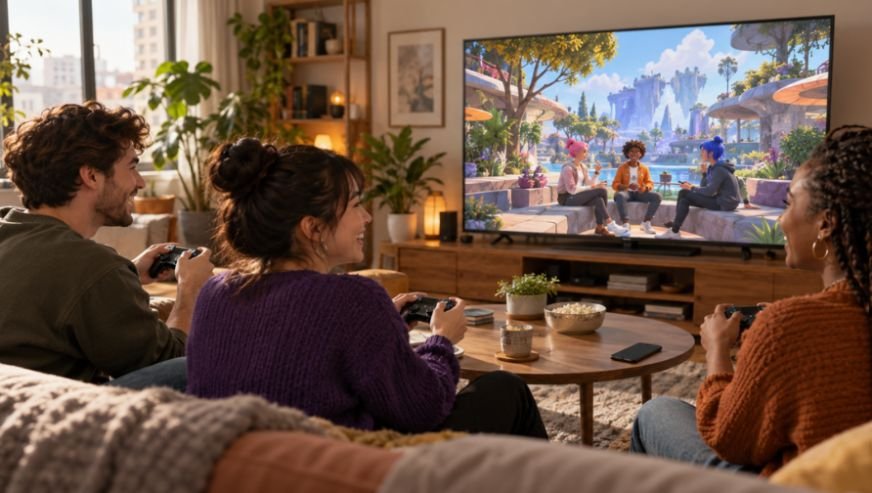
My Instagram feed used to be where I caught up with close friends; now it is an unending parade of sponsored reels, drop-shipped gadgets, and glossy lifestyle curation. Over the past year, my circle abandoned broadcast feeds entirely and moved our daily interactions inside persistent game worlds.
This shift—social hub gaming replacing traditional social media—is not an isolated fad. It is an evolutionary split in how we seek belonging online. Instead of shouting into an algorithmic void to collect vanity metrics, young cohorts are gathering in interactive 3D spaces to build, talk, and exist side by side.
Traditional Social Feeds Social Hub Gaming
┌────────────────────────┐ ┌────────────────────────┐
│ Asynchronous Posts │ │ Synchronous Hangouts │
│ Performative Metrics │ ───────► │ Shoulder-to-Shoulder │
│ Passive Consumption │ │ Persistent Co-Presence│
└────────────────────────┘ └────────────────────────┘
The Death of the Feed: Why I Traded Endless Scrolling for Virtual Lobbies
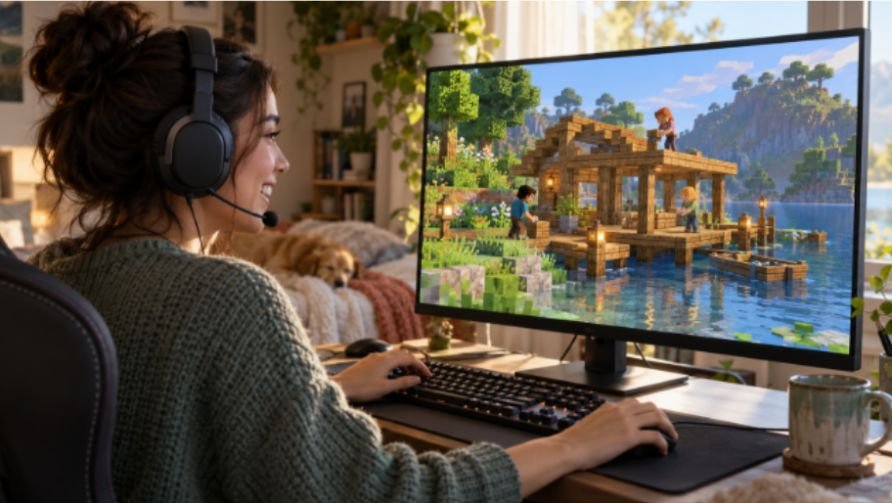
For thirty days, I tracked where my most authentic peer interactions occurred. Out of dozens of exchanges on legacy apps, almost all were reactive: a double-tap on a photo, a laughing emoji sent in response to an automated reel, or a polite comment on a career update.
Contrast that with logging into a shared Minecraft server or loading into a creative island on Fortnite. Within minutes, two friends hopped on voice chat. Nobody worried about posting the perfect vacation picture or writing witty captions. We were simply running through an obstacle course while debriefing our workdays.
According to research published by Pew Research Center, teenagers and young adults increasingly report fatigue with traditional platforms where public engagement metrics drive visibility. Passive consumption isolates us. Shared virtual sandboxes do the opposite: they give our hands something to do while our minds relax into spontaneous, natural dialogue.
The Core Mechanics Driving the Virtual Hangout Shift
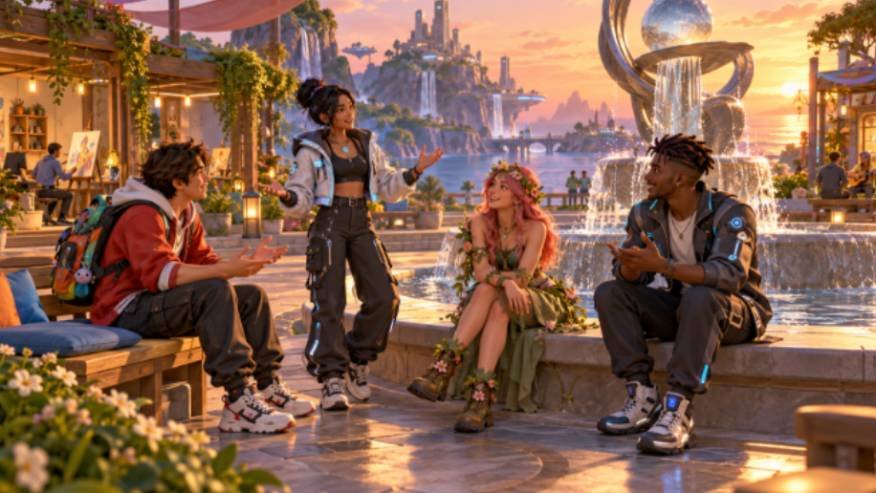
The migration away from ad-bloated algorithmic timelines is powered by fundamental human dynamics that traditional social feeds fail to satisfy.
Low-Friction Interaction Over Broadcast Anxiety
Legacy networks demand performance. If you want to engage on Instagram, X, or TikTok, you must produce content worthy of public scrutiny. This generates measurable “posting anxiety,” causing many users to lurk silently rather than interact.
In a social game, the activity provides instant context. You do not need an opening line; you are already escaping a maze, defending a tower, or exploring an open map together.
A landmark study from Stanford University notes that collaborative tasks foster stronger conversational comfort than direct face-to-face interaction. Sociologists refer to this as “shoulder-to-shoulder” engagement. When focus is directed toward a shared environment, the tension of constant eye contact and conversational pressure dissolves.
Persistent Avatars as Real Personalities
Traditional social media anchors identity to static resumes and filtered headshots. In virtual worlds, your avatar represents your chosen identity.
During my testing across Roblox and custom sandbox communities, I noticed how identity expression changes without curated headshots. Users show their personality through custom accessories, expressive animations, and bespoke animations.
The hardware supporting these spaces is adapting just as quickly. The surge in portable gaming rigs and [handheld pc gaming market growth trends] allows players to carry their high-fidelity social worlds anywhere, turning coffee shops and commutes into live hangout sessions.
The growing popularity of portable gaming devices is also reshaping how players access their favorite titles beyond traditional desktop setups. Explore the latest handheld PC gaming market growth trends to understand how these compact systems are expanding portable gaming options and making multiplayer experiences more accessible on the go.
Economic Restructuring: How Virtual Spaces Fund the Experience

Old social networks treat users as the product, harvesting behavioral data to serve hyper-targeted feed advertisements. Social game platforms rely on entirely different financial rails.
| Feature | Legacy Social Media (Ad-Based) | Social Gaming Hubs (D2A & UGC) |
| Primary Revenue Driver | Targeted programmatic display ads | Direct-to-Avatar (D2A) items & microtransactions |
| Consumer Perception | Intrusive interruption | Voluntary identity investment |
| User Role | Data source and ad target | Co-creator, participant, and world builder |
| Retention Mechanic | Rage-inducing algorithmic hooks | Community bonds and shared event memories |
Direct-to-Avatar commerce unlocks virtually friction-free digital economies. When players buy an outfit, they are not paying for gameplay advantages; they are buying social visibility.
As social gaming platforms expand their digital economies, developers are also rethinking how to monetize player engagement without disrupting the experience. The battle pass decline and new monetization models highlight how changing player expectations are encouraging the industry to explore alternatives to traditional seasonal passes and recurring purchases.
As highlighted by the Harvard Business Review, global fashion houses and lifestyle brands are skipping traditional banner campaigns to launch immersive digital showrooms. In tandem with these shifts, developers are pioneering [new monetization models] centered on engagement-based creator payouts, where independent world-builders take home direct cuts of platform engagement without bombarding visitors with pop-up ads.
The Sociological Impact: Digital “Third Places” in Real Time
Urban sociologist Ray Oldenburg coined the term “third place” to describe environments distinct from home and work—like libraries, cafes, and bowling alleys—where people gather to relax and socialize. In modern cities, physical third places have become scarce or prohibitively expensive.
Gaming worlds have filled that void. Whether it is an open-ended survival server or a casual voice lobby on Discord linked directly to a private multiplayer instance, these platforms serve as persistent digital neighborhood centers.
Home (First Place) ◄──┐
│
Work (Second Place) ◄──┼──► Social Gaming Hubs (The Modern Third Place)
│ (Spontaneous, unscripted, persistent)
Legacy Cafes/Clubs ◄──┘
Unlike static video streams, in-game gatherings support hundreds of thousands of people co-existing in shared cultural moments. Experiencing a live concert inside Fortnite alongside millions of other players worldwide feels like a physical festival, delivering a sense of scale and shared memory that an Instagram story simply cannot match.
Frequently Asked Questions About Social Hub Gaming
1. Why is social hub gaming replacing traditional social media?
Users prefer active, real-time shared experiences over passive, curated scrolling driven by ad algorithms.
2. How do gaming hubs prevent posting anxiety?
Shared game objectives provide built-in context, allowing spontaneous conversation without requiring performative posts.
3. Which platforms represent this social shift?
Roblox, Fortnite, Minecraft, and Discord lead the charge as modern, persistent digital living rooms.
4. How do brands reach users in social games?
Brands integrate custom avatar items, virtual concert sponsorships, and persistent interactive islands rather than static display ads.
Unfollow the Algorithm: Your Turn to Pick Up the Controller
The golden era of the broadcast timeline is officially closing. If you are exhausted by rage-bait feeds and endless ad carousels, stop refreshing your timeline and rethink how you spend your screen time.
Download an open-ended title, invite two friends to a private voice channel, and treat the game as your backdrop rather than a contest. You will find that laughing over a failed digital build restores the actual social fabric that social media promised to deliver all along.