
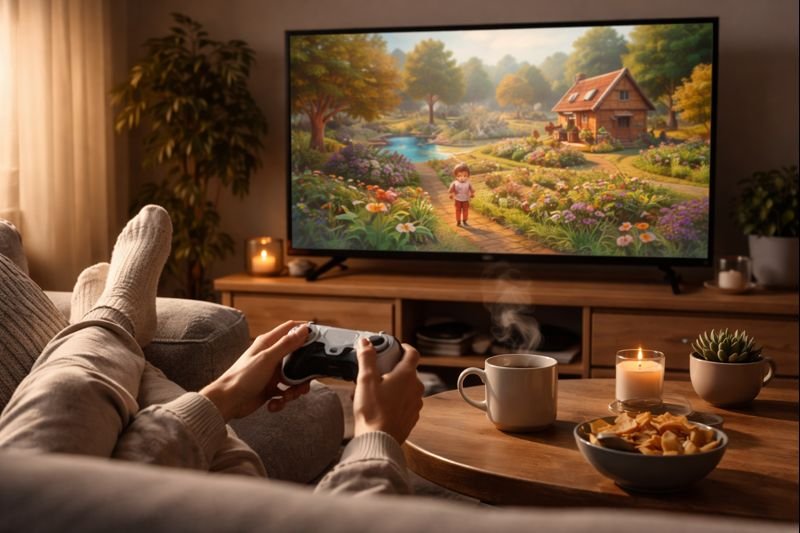
For a long time, gaming was framed as competition. Faster reflexes. Higher ranks. Louder wins. Somewhere along the way, that intensity started to feel familiar in the wrong way. Many of us were already spending our days chasing deadlines, notifications, and performance metrics. When work never really shut off, play began to feel like more work.
That shift explains why the trend of low-stress games doesn’t feel accidental. It feels corrective. Across the U.S., players are gravitating toward games that move slowly, reward consistency instead of skill spikes, and make space for calm. Not because people stopped caring about games, but because they started caring more about how games make them feel after a long day.
Burnout Culture And Why Escapism Changed Shape
Burnout in the U.S. isn’t just about long hours. It’s about a constant mental load. Slack pings after dinner. Emails checked in bed. Productivity culture that quietly rewards exhaustion. When that’s the backdrop, high-pressure competitive games can amplify the same stress signals players are trying to escape.
Low-stress gaming flips that dynamic. Instead of demanding performance, it offers permission to exist without urgency. Players aren’t opting out of the challenge entirely. They’re opting out of punishment. That distinction matters. The trend of low-stress games aligns with a broader cultural desire for environments where mistakes don’t cost you progress or dignity.
The Psychology Behind Low-Stress Gaming
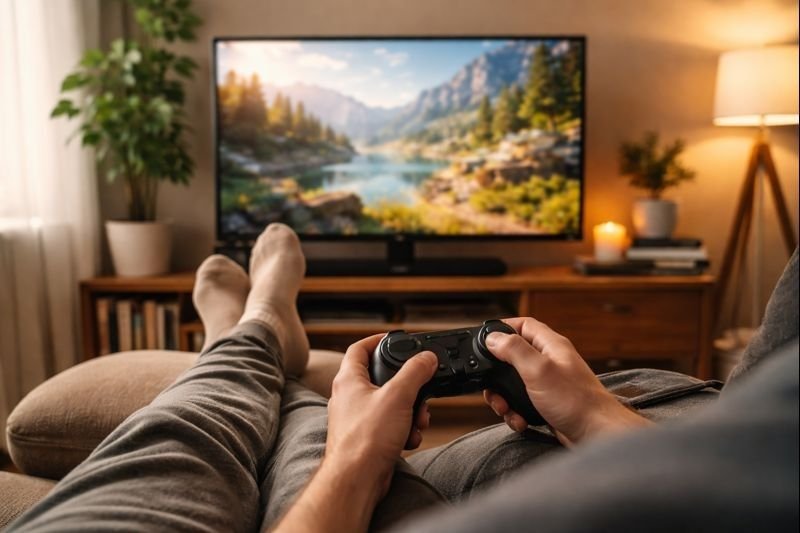
At a psychological level, cozy and relaxing video games work because they restore things that burnout strips away.
One of the biggest losses during burnout is agency. When work schedules and expectations feel immovable, autonomy disappears. Low-stress gaming brings it back in small, controlled ways. Choosing what to plant, where to walk, or how to decorate a space gives players ownership over outcomes again.
There’s also the role of flow. Repetitive, non-punitive actions create rhythm. Watering crops. Sorting items. Cleaning virtual spaces. These loops quiet the mind instead of overstimulating it. They interrupt negative thought spirals and reduce stress responses in a way that fast-paced gameplay often cannot.
Most importantly, these games avoid high-stakes failure. Competitive titles trigger adrenaline and vigilance. Cozy games activate the body’s recovery systems. That physiological difference explains why many players finish a session feeling grounded instead of drained.
How Game Design Shifted Toward Comfort
The casual games trend didn’t appear overnight. Developers noticed players lingering longer in worlds that felt safe. Sound design softened. Visual palettes became warmer. Mechanics emphasized routine over mastery.
Key design elements that support low-stress gaming include:
- Predictable outcomes instead of surprise penalties
- Non-competitive progression systems
- Open-ended goals without time pressure
These choices reduce anxiety without removing engagement. Players still invest emotionally, but without fear of falling behind.
Why American Players Are Driving This Trend

U.S. player data makes the picture clearer. A large majority of American gamers now say stress relief is their primary reason for playing. Among Gen Z, that number climbs even higher. Games have become coping tools, not status symbols.
Streaming culture reflects this shift, too. In 2024, “chill” streams dominated viewing hours, outperforming high-intensity esports content. Viewers weren’t just playing differently. They were watching differently. The trend of low-stress games mirrors how people want their digital environments to feel across platforms.
Games That Help Players Recover From Burnout
Low-stress gaming spans multiple genres, but certain formats consistently resonate with burned-out players.
Farming and life simulation games offer steady routines and gentle social interactions. Players check in daily, tend to tasks, and see gradual progress without pressure.
Task-based “zen” games transform mundane actions into satisfying rituals. Cleaning, organizing, and repairing become calming rather than tedious.
Exploration-focused games prioritize atmosphere over objectives. Players wander, observe, and absorb without fear of failure.
These experiences don’t demand emotional armor. They meet players where they are.
Low Stress Gaming Is Not Avoidance
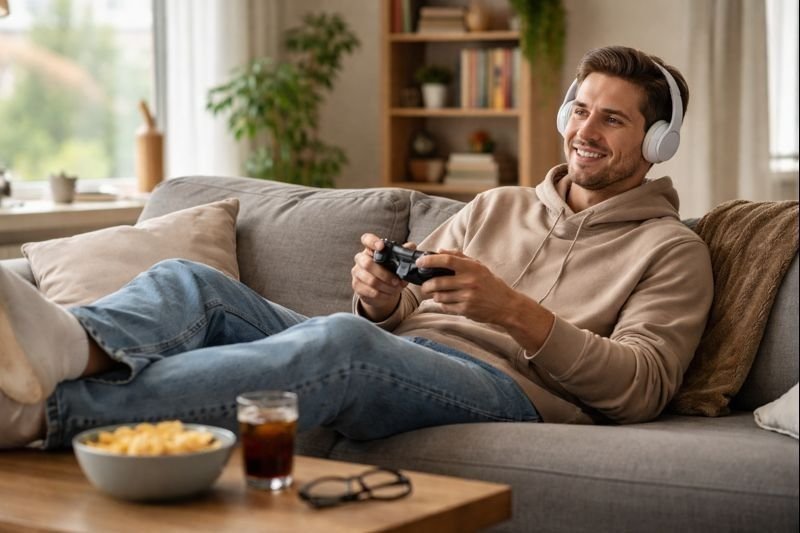
A common misconception is that relaxing video games promote disengagement. In reality, they often enable re-engagement. When stress levels drop, clarity returns. Players aren’t avoiding life. They’re regulating themselves so life feels manageable again.
Mental health and gaming don’t exist in opposition. For many Americans, low-stress gaming is one of the few accessible ways to decompress without substances, spending, or social obligation.
Where This Trend Is Headed
The trend of low-stress games isn’t a passing preference. It reflects a deeper recalibration of what leisure is supposed to do. As long as burnout remains part of American work culture, players will continue seeking digital spaces that feel forgiving.
Developers are paying attention. Expect more games designed around care instead of conquest. More systems that reward presence rather than performance. And more players are choosing calm, not because they gave up, but because they learned what they actually need.
Frequently Asked Questions (FAQs)
1. Why Are Low-Stress Games Becoming More Popular In The U.S.?
Because many American players are burned out from work and constant connectivity, they prefer games that help them relax rather than compete.
2. Are Low-Stress Games Only For Casual Gamers?
No. Many experienced gamers turn to low-stress gaming as a balance after spending years with competitive or high-pressure titles.
3. Do Relaxing Video Games Actually Reduce Stress?
Yes. Studies and player reports show that predictable, non-punitive gameplay can lower anxiety and support emotional regulation.
4. Is The Trend Of Low Stress Games Here To Stay?
Given current U.S. burnout levels and changing leisure habits, this trend is likely to continue growing rather than fading.
Final Thoughts
The rise of low-stress gaming says less about games and more about people. When everyday life becomes relentless, play adapts. The popularity of cozy, calming experiences reflects a collective need for safety, control, and emotional breathing room. In a culture that rarely slows down, these games quietly offer permission to rest without guilt.
And that may be why the trend of low-stress games feels less like entertainment and more like self-preservation.