
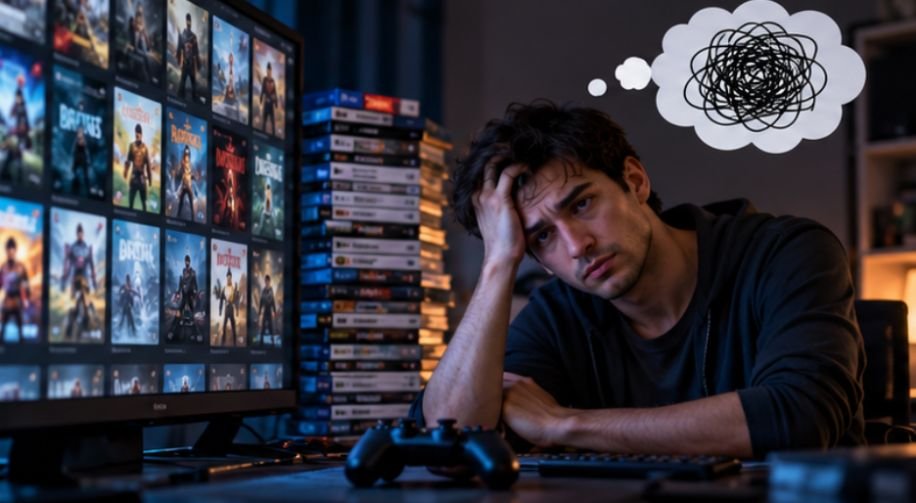
Gaming burnout is not always caused by playing too many hours. Sometimes the bigger problem is turning entertainment into another obligation.
Research using objective play data from 38,935 players found little evidence that gaming time alone substantially affects well-being. Motivation appears to matter more. That distinction changes how I think about how to overcome video game burnout and backlogs: the goal is not necessarily to play less. It is to remove the pressure that makes playing feel like unpaid work.
A library containing 200 unfinished games is not a 200-item to-do list. Once I accept that, deciding what to play becomes dramatically easier.
Why Does Gaming Suddenly Stop Feeling Fun?
Burnout usually appears when the reason for playing changes.
A game may initially offer curiosity, challenge, exploration, competition, or social connection. Eventually, however, the motivation can shift toward finishing battle passes, clearing achievements, keeping up with friends, completing daily quests, or reducing an intimidating backlog.
Self-Determination Theory helps explain the difference. It suggests motivation tends to thrive when people experience autonomy, competence, and connection. Researchers at the University of Rochester have applied these principles directly to gaming, finding that these psychological experiences contribute to why games remain engaging.
Readers interested in the underlying psychology can explore the University of Rochester’s gaming motivation research and the broader Self-Determination Theory framework.
When “I want to play tonight” becomes “I should finish this tonight,” autonomy starts disappearing.
What Are the Signs of Video Game Burnout?
Burnout does not mean occasionally getting bored with one title. Games are entertainment, and interests naturally change.
I would look more closely at my habits when several of these signs appear together:
- I browse my library longer than I actually play.
- Starting a game feels exhausting.
- I repeatedly launch familiar games because choosing something new feels difficult.
- Side quests and achievements feel like chores.
- I continue playing even though I am no longer enjoying myself.
- New releases create anxiety rather than excitement.
- I feel guilty about abandoning games I bought.
- Gaming regularly interferes with sleep, exercise, work, school, or relationships.
Research involving 608 esports players found that intrinsic motivation was negatively associated with burnout, particularly exhaustion and a reduced sense of accomplishment. Although competitive esports players are not identical to casual gamers, the finding reinforces an important principle: enjoying the activity itself matters.
The underlying study is available through the National Library of Medicine.
How Can You Reset Gaming Burnout?
The fastest solution is often surprisingly simple: temporarily stop trying to solve the backlog.
Take a Genuine Gaming Break
Take several days or a week away from games if launching them feels automatic rather than exciting.
Do something different with the same leisure hours. Exercise, read, cook, watch a movie, meet friends, walk outside, or pursue another hobby. The point is not to punish yourself for gaming. It is to give your attention another destination.
The American Psychological Association similarly recommends deliberately disconnecting from technology and creating quiet periods for mental recharge. See the APA’s advice on healthy technology use and taking time to recharge.
Return With Something Completely Different
Do not immediately restart another 80-hour open-world game after burning out on one. Try the opposite experience.
If you were grinding a competitive multiplayer title, play a relaxed single-player adventure. If giant RPGs exhausted you, try a three-hour indie game. If complex strategy games became mentally demanding, revisit an old favorite that requires little learning. Contrast creates novelty without requiring you to quit the hobby.
Short narrative games are another option when lengthy campaigns feel overwhelming, offering focused stories that can be completed in a few hours without adding another major commitment to your backlog.
Another way to refresh your gaming routine is to play with friends in the same room, as the renewed interest in local co-op games shows how shared experiences can offer an alternative to solo gaming sessions.
How to Overcome Video Game Burnout and Backlogs With the Rule of Three
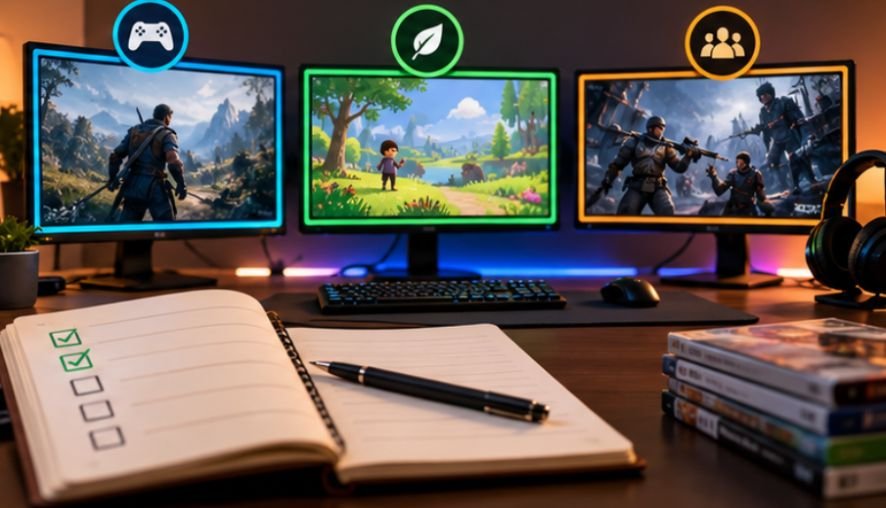
My favorite backlog system has one restriction: only three games can be considered “active.”
Choose:
- One main game.
- One short or relaxing game.
- One multiplayer, social, or replay game.
Everything else stays outside your active queue.
This reduces the nightly experience of staring at dozens of thumbnails and wondering which game deserves your time.
More importantly, the system preserves choice. You are organizing entertainment, not constructing another project-management dashboard.
Give Every Backlog Game a Two-Hour Audition
Money already spent should not dictate dozens of future hours.
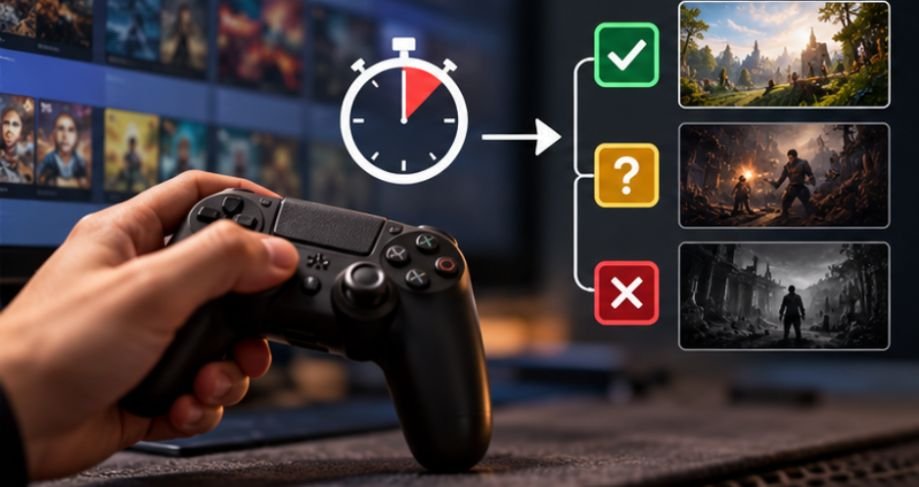
Give an unfamiliar game roughly one or two focused sessions. If you are curious about what happens next, continue. If you repeatedly need to persuade yourself to launch it, remove it from your active list.
Ask three questions:
Am I having fun right now?
Do not ask whether reviewers loved it or whether it supposedly becomes amazing after 15 hours.
Am I curious about what happens next?
Curiosity is often a better reason to continue than completion percentage.
Would I choose this game tonight if I had never bought it?
That question exposes sunk-cost thinking quickly.
If the answer is no across all three questions, dropping the game is reasonable.
Stop Trying to Finish Everything
Modern games routinely contain optional missions, collectibles, trophies, seasonal challenges, DLC, crafting systems, and massive maps.
Finishing the story does not require consuming every activity developers included.
Try separating games into four categories:
- Play now
- Play later
- Maybe
- Drop
Be aggressive with “drop.”
Your backlog should become smaller because your standards become clearer, not because you force yourself through games you dislike.
This distinction matters because research on gaming motivation has identified achievement, competition, social interaction, immersion, discovery, role-playing, and escapism among the many reasons people play. Different players are looking for different rewards.
There is no universal definition of “properly finishing” a game.
Should You Stop Buying New Games?

A temporary buying freeze can help, but I would not turn it into another harsh rule.
Instead, use a replacement system: before buying a new full-priced game, finish, abandon, or deliberately archive one active title.
Sales deserve extra skepticism. A $60 game discounted to $15 saves nothing if you never wanted to play it enough to begin with.
Wishlist first. Buy later.
Waiting several days also separates genuine excitement from fear of missing a discount.
Protect Sleep Before Cutting Gaming Completely
Sometimes “gaming burnout” is ordinary exhaustion. If sessions regularly extend deep into the night, improving sleep may restore enjoyment faster than deleting your library.
MedlinePlus notes that adults generally need seven to nine hours of sleep and recommends minimizing distractions such as televisions, computers, and phones around bedtime.
Its healthy sleep recommendations provide practical starting points. For families, the ESRB’s screen-time guidance also emphasizes flexible limits that keep gaming from displacing other responsibilities.
When Is Gaming Burnout Something More Serious?
Ordinary burnout and problematic gaming are not automatically the same thing.
Being bored with games, abandoning purchases, or taking a month away does not indicate a disorder.
Pay closer attention if gaming repeatedly harms school, work, finances, relationships, hygiene, sleep, or other important activities and you feel unable to change the behavior despite those consequences.
Research also suggests motives matter. A systematic review found that gaming for emotional escape had a particularly robust association with symptoms of problematic gaming, although researchers reported substantial variation between individuals.
Persistent problems deserve more attention than an overflowing Steam, PlayStation, Xbox, or Nintendo library.
Frequently Asked Questions
1. How long should I take a break from gaming burnout?
There is no required duration. Try several days or a week first. Return when playing sounds genuinely appealing rather than something you feel obligated to do.
2. Should I delete games from my backlog?
Yes, if you realistically no longer want to play them. Removing unwanted titles from your mental backlog reduces pressure without reducing the value of games you genuinely enjoy.
3. How do I stop feeling guilty about unfinished games?
Treat the purchase as payment for an opportunity, not a contract requiring completion. Your free time has value too.
4. What is the easiest way to learn how to overcome video game burnout and backlogs?
Pause unnecessary purchases, keep only two or three games active, abandon titles you dislike, take occasional breaks, and choose games according to current enjoyment rather than completion pressure.
A Better Way to Think About Your Game Library
A backlog only becomes stressful when I treat ownership as obligation. Games are supposed to compete for my leisure time, not automatically claim it.
I would rather abandon ten mediocre experiences and enthusiastically remember one great game than complete all eleven while watching progress bars like deadlines. Keep a tiny active queue, take breaks without guilt, protect sleep, and stop measuring enjoyment by completion percentage. The unfinished games will still be there.
The real victory is not finally reaching “zero backlog.” It is reaching the point where looking at your library makes you curious again.