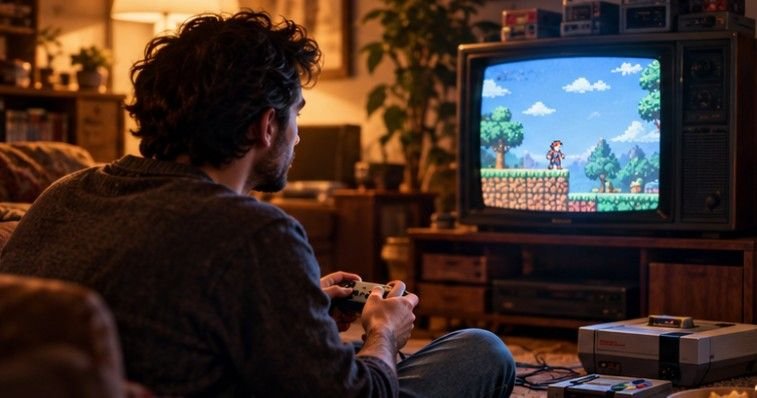
The average American video game player is now 37 years old. That single number helps explain why old characters, pixel art, remastered soundtracks, and familiar menu sounds carry so much commercial power. More than 212 million Americans play games weekly, according to the Entertainment Software Association’s 2026 data.
Understanding how gaming subsist on player nostalgia means looking beyond companies simply recycling old ideas. Games can reconnect players with childhood friendships, long weekends, first consoles, and earlier versions of themselves. Publishers have learned that those memories can become powerful reasons to replay, subscribe, collect, and buy.
How Gaming Subsist on Player Nostalgia Through Familiarity
Publishers have several ways to turn old memories into new products. The most obvious are remakes and remasters. A remaster can improve resolution, frame rates, controls, loading times, and accessibility while largely preserving the original experience. A remake has more freedom to rebuild environments, combat, storytelling, or technology while keeping recognizable characters and themes.
Games such as Final Fantasy VII Remake and Resident Evil remakes illustrate the appeal. Players receive recognizable worlds without necessarily having to tolerate every technical limitation of the originals.
For publishers, established intellectual property can also reduce one major business challenge: explaining a completely unfamiliar concept to consumers. A recognized franchise starts with an existing audience, although familiarity never guarantees success.
Nostalgia Marketing Starts Before the Game Launches
Publishers do not need to remake an entire game to trigger memory. A trailer can revive an old musical theme. Cover art can recreate an earlier composition. A returning character, sound effect, level design, logo treatment, or controller can communicate familiarity almost instantly.
The danger appears when recognition becomes the product rather than supporting it.
Players may forgive dated visuals in an authentic retro release. They are much less forgiving when a full-price modern game uses recognizable branding while offering weak performance, shallow gameplay, excessive monetization, or little meaningful innovation. Nostalgia may create attention. It cannot permanently replace quality.
Why Are Younger Players Interested in Games They Never Grew Up With?
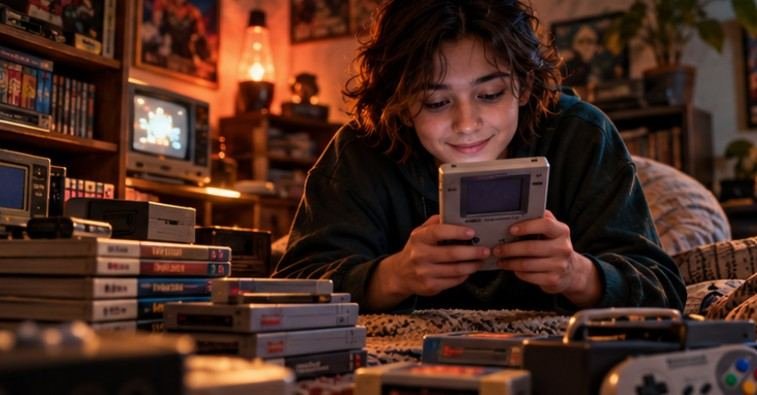
Not every retro gamer is revisiting childhood. The same 2026 Syracuse University-hosted research found evidence of what researchers call historical nostalgia: people playing games from periods that predated their own childhoods or even their birth. That makes retro gaming more interesting than a simple story about adults reliving the 1990s.
For younger players, pixel graphics, cartridge collecting, CRT displays, chiptune music, fixed-camera horror, and low-poly PlayStation-era visuals can feel novel rather than old.
Independent developers understand this well. Many modern games borrow 8-bit, 16-bit, arcade, or early 3D aesthetics while combining them with modern controls, autosaving, accessibility options, and contemporary storytelling.
Research archived by Indiana University has specifically examined video-game nostalgia and argues that replaying or recreating earlier gaming experiences can evoke nostalgic responses as players and the medium age together. Retro design has effectively become an artistic vocabulary rather than merely an outdated technology.
Why Older Games Can Feel Refreshingly Simple
Nostalgia also benefits from comparison with modern gaming habits. Current games can involve battle passes, seasons, currencies, daily challenges, updates, timed events, social feeds, and sprawling upgrade systems. Those features can provide longevity, but they also create commitment.
An older platformer or arcade game may instead offer one straightforward promise: start playing and have fun. That simplicity matters for adults with jobs, families, and limited leisure time. The ESA reports that 66% of American adult players say passing time or relaxing is a reason they play.
Players who value that simplicity may also prefer games you can play casually without guides or low-commitment games for busy players rather than experiences built around constant progression.
How Can You Tell Whether a Nostalgia-Driven Game Is Actually Worth Buying?
Before paying for another remaster, remake, anniversary edition, or retro-inspired release, I would use a simple four-part test.
1. Remove the Memory
Ask yourself whether the gameplay still looks enjoyable if you ignore the franchise name. If nostalgia is doing all the persuasive work, waiting for reviews or a discount may make sense.
2. Identify the Real Improvements
Look for meaningful upgrades such as improved controls, accessibility, performance, restored content, better save systems, or redesigned mechanics. Higher resolution alone does not automatically justify another purchase.
3. Check What Was Lost
Remakes sometimes change art direction, difficulty, pacing, music, dialogue, or systems that fans considered essential. Modernization can improve an old game while simultaneously removing the feature you actually loved.
4. Compare Price With Replay Value
Ask a simple question: am I buying hours of entertainment or paying primarily to experience recognition? There is nothing wrong with choosing the second option. Recognizing it simply makes the purchase intentional.
Does Nostalgic Gaming Actually Improve Well-Being?
The evidence requires nuance. Psychological research links nostalgia with social connectedness, self-continuity, and a greater sense of meaning. Princeton University’s overview of self and identity likewise describes research connecting nostalgia, belonging, and continuity between past and present selves.
But that does not mean repeatedly playing old games automatically improves mental health. The 2026 retro-gaming study found no stable well-being differences between people who played retro games and those who did not. That distinction is important. Nostalgia can provide comfort without functioning as medicine.
When Does Nostalgia Stop Working?
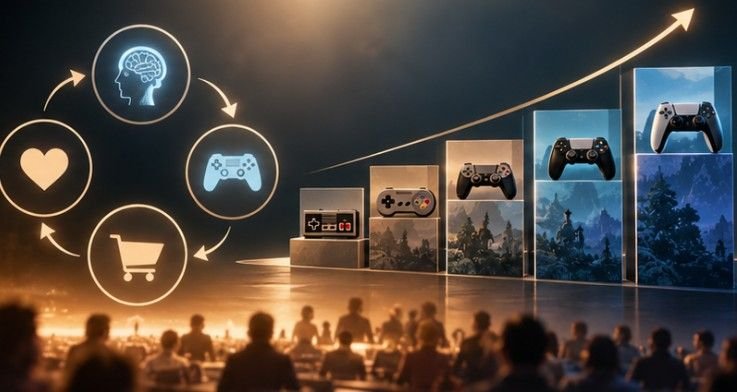
Nostalgia becomes less effective when companies assume players want repetition instead of remembrance.
People often remember the emotional core of an old game more strongly than every inconvenient mechanic surrounding it. They may remember exploration, competition, friendship, or discovery while forgetting loading screens, awkward controls, brutal checkpoints, and technical limitations.
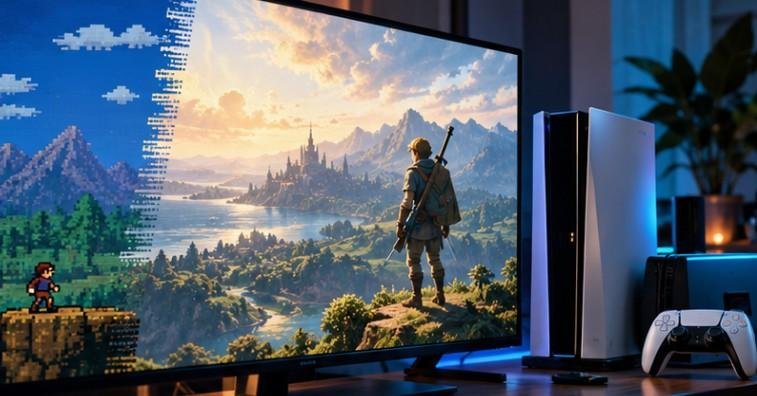
Successful revival projects therefore face a delicate challenge: preserve the feeling while improving the friction. That is why the strongest nostalgia-driven games rarely behave like museum exhibits. They understand what players remember, determine why those memories mattered, and rebuild that experience for present-day expectations.
FAQs
1. Why is nostalgia so powerful in video games?
Games combine memories with active participation. Familiar music, characters, mechanics, and environments can reconnect players with earlier life experiences and social relationships.
2. Why do gaming companies remake old games?
Recognizable franchises already have audiences, reducing some marketing uncertainty. Remakes also let publishers modernize successful concepts for existing fans and new players.
3. Do Gen Z players experience gaming nostalgia?
Yes, although it may involve childhood games from more recent eras. Younger players can also develop historical nostalgia for games and aesthetics created before they were born.
4. Can nostalgia make a bad game successful?
It can generate attention and early sales, but nostalgia alone cannot guarantee lasting success. Poor gameplay, performance, pricing, or excessive monetization can quickly overwhelm sentimental appeal.
Why Our Gaming Past Keeps Returning
The real answer to how gaming subsist on player nostalgia is not that players refuse to move forward. It is that interactive memories are unusually durable. A controller, melody, loading screen, or pixelated landscape can revive people, places, and periods of life that disappeared years ago.
The gaming industry will keep returning to those memories because millions of players still value them. The best developers, however, understand the difference between exploiting recognition and respecting it. Nostalgia works best when an old feeling becomes the foundation for a genuinely worthwhile new experience.