

Americans ages 35 to 44 have less leisure time than any other adult age group measured by the U.S. Bureau of Labor Statistics. In 2025, they averaged only 3.9 hours of leisure and sports activity per day, compared with 7.4 hours for adults 75 and older.
That statistic explains much of why adults stop playing video games. The controller rarely becomes less interesting overnight. Instead, careers, children, relationships, fatigue, changing friendships, and different entertainment preferences compete for the same limited hours.
Yet aging does not automatically end gaming. Millions of older Americans still play regularly, which suggests that the real story is not age itself. It is whether gaming still fits the player’s life.
Why Does Gaming Become Harder to Fit Into Adult Life?
The biggest change is often not enthusiasm. It is available time. According to the U.S. Bureau of Labor Statistics American Time Use Survey, full-time employees averaged 8.1 hours of work on days they worked in 2025. Adults ages 35 to 44 also spent more time caring for household members than most other age groups.
That creates a problem for games designed around long sessions. A college student might spend an entire Saturday exploring an open world. A 38-year-old parent may have 45 minutes after dinner, chores, and bedtime routines. Starting a complicated RPG can feel less appealing when simply remembering the controls and unfinished quests consumes part of that window.
Games Can Start Feeling Like Another Obligation
Modern progression systems can make the problem worse. Daily challenges, battle passes, timed events, crafting systems, ranked ladders, and enormous maps create constant goals. Those systems can be rewarding when a player has time. Under a crowded schedule, they can resemble another list of unfinished tasks.
A hobby stops feeling restorative when the player thinks, “I need to log in tonight.” That distinction matters. Adults may not dislike games. They may dislike feeling managed by them.
Mental Energy Can Matter More Than Free Time
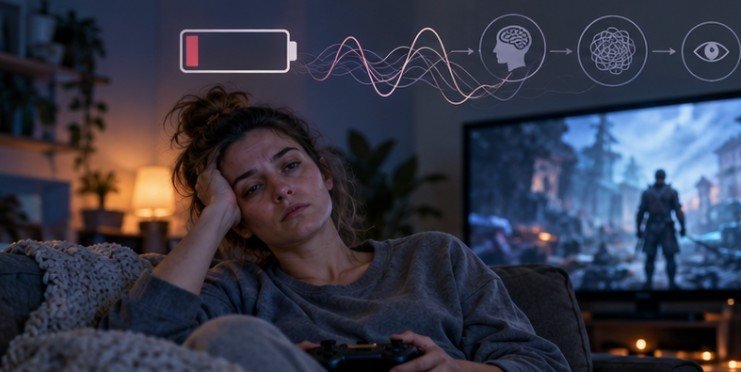
Having two free hours does not necessarily mean having two hours of usable gaming energy. Interactive games require decisions, attention, memory, coordination, and sometimes rapid reactions. After a workday filled with meetings, emails, deadlines, commuting, or childcare, passive entertainment may require less effort. Watching an episode of television lets someone mentally drift. A competitive shooter demands constant attention.
That helps explain why somebody can say, “I don’t have energy to game,” while spending the same evening watching Netflix or YouTube. The issue is not simply minutes available. It is cognitive effort.
Ironically, gaming can also relieve stress. A systematic review available through the National Institutes of Health examined 28 studies and found evidence that commercial video games, including casual and action titles, can reduce stress and anxiety.
So the relationship works both ways. The wrong game can feel exhausting, while the right one can become an effective way to decompress.
What Happens When the Gaming Group Disappears?
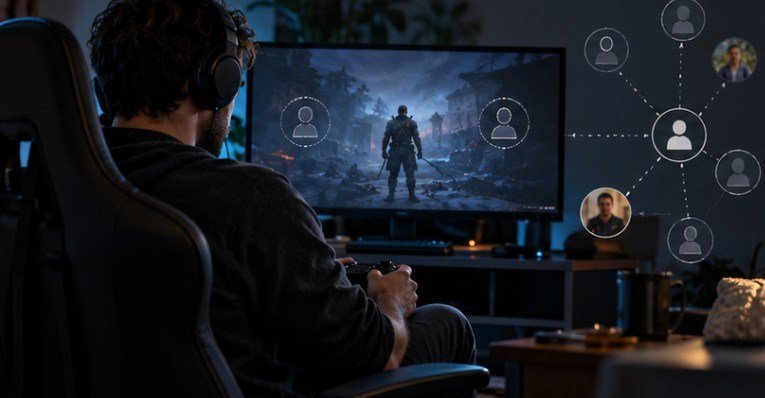
For many adults, gaming memories are inseparable from people. Friday-night multiplayer sessions, couch co-op, LAN parties, and regular online groups made the activity social. Then adulthood fragments schedules. One friend works nights. Another has children. Someone moves across the country. Another simply loses interest.
Research from Penn State University found that multiplayer gaming associated with social bonding was linked with greater perceived social support, while organizing one’s entire life around gaming was associated with poorer social outcomes.
That helps explain why a favorite multiplayer game can suddenly feel empty when the group disappears. Sometimes people miss their friends more than they miss the game.
Do Adults Simply Outgrow Video Games?
Not necessarily. New AARP research offers a useful counterexample. Its 2026 study found that 49% of Americans age 50-plus play video games, representing roughly 60.2 million people. Among those older gamers, 75% said they play to relax and decompress, while 61% said gaming helps relieve stress or anxiety.
The AARP research on adults 50-plus also found that 65% typically play for 15 to 60 minutes per session. That suggests why adults stop playing video games cannot be reduced to “people grow up.” Gaming often changes instead.
A player who once spent six-hour sessions in competitive games may later prefer puzzles, strategy games, handheld titles, short indie games, or single-player experiences that can be paused instantly.
Has the Gaming Industry Changed What Adults Want to Play?
Players change, but games change too. Some adults become frustrated with aggressive monetization, mandatory online connectivity, repetitive sequels, lengthy tutorials, seasonal content, or multiplayer environments where maintaining skill requires constant practice.
Competitive gaming can become especially demanding. Missing several weeks may mean returning to changed maps, balance patches, new weapons, and opponents who never stopped practicing.
Single-player games can create the opposite problem: enormous campaigns. A 100-hour adventure may offer extraordinary value per dollar, but time-poor adults may prefer a memorable eight-hour experience they can realistically finish. The better question therefore becomes: Does this game respect the amount of attention I can give it?
A 5-Minute Test for Figuring Out Why You Stopped Gaming

Before deciding that gaming simply “isn’t for you anymore,” run through five questions.
1. Do I Still Enjoy Games Once I Start?
If yes, access may be the problem rather than interest.
2. Am I Avoiding Games Because They Feel Too Long?
Try shorter campaigns, roguelikes, racing games, handheld games, or titles with natural 20-minute stopping points.
3. Do I Miss Playing or Miss Playing With Friends?
If social connection was the main reward, changing games may not solve the problem. Rebuilding a regular group might.
4. Does Gaming Feel Like Work?
Battle passes, ranked modes, and daily objectives may be creating pressure. Choose games without recurring obligations.
5. Am I Mentally Drained Before I Start?
Try low-pressure games instead of abandoning the hobby completely. Even a short session can work as a reset. Our guide to using gaming as a relaxation activity explores this approach further.
Is Losing Interest in Gaming a Sign of Gaming Burnout?
Sometimes, but ordinary changes in taste should not be confused with a disorder. Burnout may appear as boredom, irritability, repeatedly launching games without enjoying them, or feeling obligated to keep playing.
More serious problematic gaming involves impairment. The American Psychiatric Association notes that Internet Gaming Disorder remains a condition requiring further research in the DSM-5-TR and involves significant distress or impairment, not merely playing frequently.
Likewise, stopping gaming does not automatically indicate depression, aging, or declining reflexes. People regularly rotate between hobbies as their responsibilities and interests change.
Frequently Asked Questions
1. At what age do most people stop playing video games?
There is no universal stopping age. Gaming participation changes throughout adulthood, and millions of Americans over 50 continue playing regularly.
2. Why don’t video games feel fun anymore as an adult?
Mental fatigue, repetitive gameplay, limited time, missing friends, changing tastes, or gaming burnout can reduce enjoyment even if you once loved games.
3. Is it normal to lose interest in gaming?
Yes. Interests naturally change. Taking months or even years away from gaming does not mean anything is wrong.
4. Can adults enjoy gaming without spending hours playing?
Absolutely. Short campaigns, portable games, puzzles, racing titles, and games with flexible save systems can fit into brief sessions.
The Controller May Not Be the Problem
Understanding why adults stop playing video games becomes easier once we stop treating age as the explanation. Adulthood changes the economics of attention. Free time becomes fragmented, energy becomes valuable, friends become harder to coordinate with, and entertainment has to compete harder for every hour.
But gaming does not have to disappear. It may simply need a different shape. Instead of chasing the experiences you enjoyed at 18, choose games that fit the person you are now. Sometimes rediscovering the hobby requires nothing more complicated than finding a game that respects your time.