
There’s been a quiet shift happening in the gaming scene for a while now. It’s not driven by blockbuster trailers or billion-dollar marketing budgets. It’s happening in small apartments, shared workspaces, and late-night Discord calls where tiny teams are building something personal and risky. That’s where indie games for small teams have started to matter more than anyone expected.
If you’ve been playing games over the last decade, you’ve probably felt it. Games feel more intimate. More honest. Sometimes rough around the edges, but emotionally sharper. That change didn’t come from large studios suddenly becoming brave. It came from small teams choosing creativity over safety and trusting players to meet them halfway.
Why Creative Risk Matters More Than Polish
Big studios operate under pressure. High budgets mean high expectations, and that often leads to familiar mechanics, proven genres, and minimal risk. Small teams don’t have that luxury, which turns into an advantage.
With fewer stakeholders involved, indie games for small teams can explore ideas that might never survive a corporate pitch meeting. Personal stories, unconventional pacing, and experimental art styles become viable when success isn’t measured solely by opening-week sales.
A clear example is Celeste, a game built by a small team that centered on mental health and personal struggle. It didn’t rely on spectacle. It relied on empathy. That emotional honesty became part of why it resonated so deeply with players and streamers alike.
Small Teams Move Faster Than Big Studios Ever Can
Agility is one of the most underestimated strengths of indie development. Without layers of approval and long production pipelines, small teams can react quickly to how people are actually playing their games.
You saw this clearly with Among Us. Developed by a tiny studio, it quietly launched, then exploded once streamers and friend groups adopted it. The developers were able to update, balance, and respond in real time as player behavior evolved. That kind of speed is nearly impossible at the AAA scale.
The same pattern showed up with Lethal Company, where community-driven moments and shared chaos became the core appeal. These games didn’t wait for trends. They caught them as they formed.
How Indie Developers Redefine Entire Genres
Another reason indie games for small teams shape modern game culture is their willingness to reshape genres rather than polish existing ones. Many mechanics that now feel standard started as risky experiments.
Look at how roguelike elements became mainstream. Games such as Hades and Dead Cells took a niche format and made it emotionally engaging and widely accessible. These weren’t massive studios testing a market. They were small teams refining ideas through iteration and player feedback.
Even sandbox creativity owes a lot to indie roots. Minecraft, which began as a small independent project, permanently changed how players think about ownership, creativity, and open-ended play. Its influence still echoes across classrooms, modding communities, and even AAA design philosophies.
Tools And Platforms Changed Who Gets To Build Games
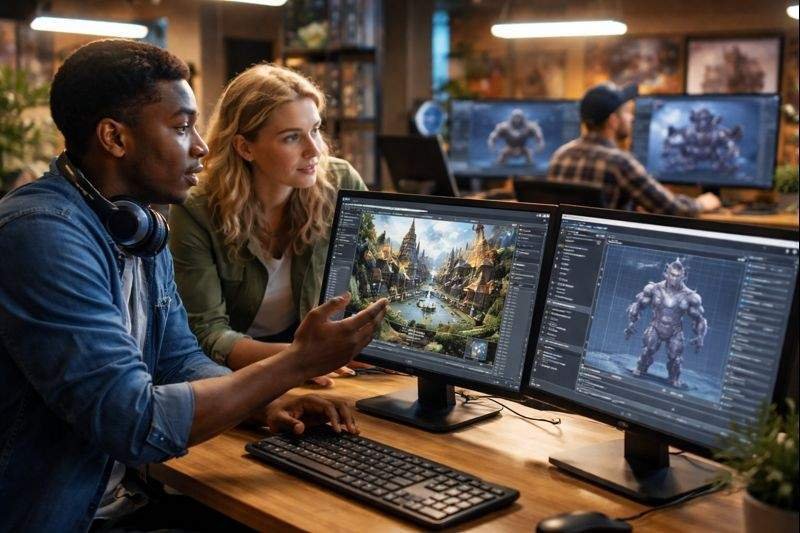
The rise of accessible engines like Unity and Unreal Engine removed technical barriers that once kept small teams out of the industry. Today, creative vision matters more than studio size.
Distribution followed the same path. Platforms like Steam and itch.io let small teams publish directly to players without needing a traditional publisher. That direct connection has changed expectations on both sides.
Players now expect transparency, regular updates, and developer presence. Small teams thrive here because they’re close to their communities. Feedback doesn’t disappear into a ticketing system. It turns into real changes.
Cultural And Economic Impact In The United States
This shift isn’t just cultural. It’s economic. In recent years, indie titles have consistently appeared among the top-grossing games on storefronts, proving that originality can compete financially.
More importantly, these games are reshaping what players value:
- Emotional connection over visual excess
- Unique mechanics over familiar formulas
- Community trust over hype-driven launches
Large studios are paying attention. You can see indie-inspired mechanics and storytelling showing up in bigger releases, often years after small teams proved they worked.
Why Players Keep Supporting Small Teams

Players have become more intentional about what they buy and why. Supporting indie games for small teams often feels like supporting a creative voice rather than a product line.
These games invite players into the process. Roadmaps are shared. Mistakes are acknowledged. Success feels collective. That relationship is difficult to replicate at scale, and it’s one reason indie communities remain so loyal long after launch.
Frequently Asked Questions (FAQs)
1. Why Are Indie Games For Small Teams So Popular?
They offer originality, emotional depth, and a closer connection between developers and players. Gamers increasingly value meaningful experiences over visual spectacle.
2. Do Indie Games Really Influence AAA Studios?
Yes. Many mechanics, genres, and storytelling approaches now common in large releases were first proven by small indie teams.
3. Are Indie Games Financially Sustainable For Small Teams?
They can be. While not every project succeeds, strong community support and digital distribution platforms have made profitability more achievable than before.
4. Where Do Most Players Discover Indie Games?
Primarily through digital storefronts, social media, livestreams, and word of mouth within gaming communities.
Final Thoughts
What makes this moment different is that indie games aren’t positioned as alternatives anymore. They’re setting the pace. Indie games for small teams are shaping how stories are told, how mechanics evolve, and how developers and players relate to one another. They remind the industry that risk isn’t something to eliminate. It’s something to embrace.
As long as creativity matters more than formulas, small teams will continue to leave an outsized mark on modern game culture.