

A gaming blog with 10,000 monthly visitors can sometimes earn more than one attracting 50,000. The difference isn’t necessarily traffic. It’s what readers do after arriving.
So, how do gaming blogs make money without charging visitors to read articles? They combine advertising, affiliate commissions, sponsorships, digital products, and audience-supported content. Some earn from thousands of page views, while others generate revenue from a handful of well-targeted purchases.
The challenge is choosing revenue streams that fit the audience rather than covering every page with advertisements.
1. Display Advertising Turns Gaming Traffic Into Income
Display advertising is among the simplest ways to monetize gaming content.
Website owners place advertisements alongside reviews, walkthroughs, tutorials, and industry news. Advertisers pay through arrangements based on impressions, clicks, or other performance measures.
Google AdSense provides an accessible starting point, while publishers with qualifying audiences may explore platforms such as Mediavine or Raptive.
How Much Can Gaming Blogs Earn From Ads?
Advertising revenue is commonly measured using RPM, or revenue per thousand page views.
The calculation is straightforward:
Monthly advertising revenue = (Page views ÷ 1,000) × Page RPM
For example, a gaming website receiving 40,000 monthly page views at an $8 page RPM would generate approximately $320.
At a $15 RPM, the same traffic would produce $600.
These are illustrative calculations, not guaranteed industry rates. Actual earnings depend on visitor location, advertiser demand, traffic quality, seasonality, and advertising placements.
Readers from the United States may attract stronger advertiser competition in certain categories. However, aggressive advertising can damage page speed and make walkthroughs frustrating to read.
2. Affiliate Marketing Rewards Purchase-Focused Content

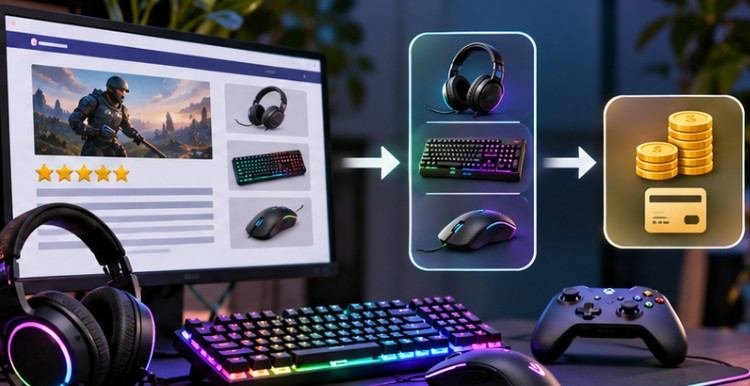
Affiliate marketing allows gaming bloggers to earn commissions when visitors purchase products through tracked referral links.
Common affiliate categories include gaming laptops, mechanical keyboards, controllers, monitors, headsets, and gaming chairs.
Programs offered through retailers such as Amazon Associates and specialized gaming brands provide potential opportunities. Commission rates and eligibility depend on the individual program.
Why Buying Guides Can Outperform Gaming News
Consider two articles. One discusses an upcoming game’s release date. Another compares affordable gaming monitors for competitive shooters.
The second article attracts readers who may already be preparing to purchase.
If 2,000 visitors read the monitor comparison, 5% click an affiliate link, and 4% of those clicks convert, four purchases result.
At an average $250 order value and a hypothetical 4% commission, the article earns $40. The value comes from purchase intent, not simply page views.
Google’s guidance on writing high-quality reviews emphasizes original evidence, comparisons, and practical experience. Successful affiliate publishers explain product limitations rather than recommending everything.
3. Sponsored Articles Create Direct Brand Revenue
Gaming companies frequently seek exposure through specialized websites. Developers may sponsor game previews, while accessory manufacturers can collaborate with publishers on product demonstrations, tutorials, or promotional campaigns.
Sponsorships can generate hundreds or thousands of dollars per campaign, but fees vary substantially depending on audience, deliverables, and negotiation.
An independent blog with a highly engaged audience may appeal to a specialist brand even without enormous traffic.
Transparency Protects Long-Term Revenue
Sponsored coverage should never disguise advertising as an independent editorial opinion.
The Federal Trade Commission’s endorsement guidance explains that material relationships between publishers and advertisers must be disclosed clearly when relevant.
The same principle applies to affiliate recommendations and products received for free.
Publishers should separate paid promotions from unbiased reviews and use appropriate sponsored-link attributes. Audience trust is an asset that a single misleading partnership can damage.
4. Digital Products Offer Higher Revenue Per Customer
Some gaming websites earn money by selling their own educational or downloadable resources. Examples include advanced strategy guides, gaming setup planners, downloadable checklists, original gaming artwork, and instructional courses.
Unlike affiliate marketing, selling an original product allows the publisher to retain more control over pricing and customer relationships.
A $15 strategy guide purchased by 30 readers generates $450 in gross revenue before platform fees, refunds, and production expenses.
Digital products work best when readers face a specific problem that free articles haven’t fully solved.
A competitive gaming blog, for example, might offer personalized coaching sessions or structured training plans.
However, publishers must respect intellectual property rights. The U.S. Copyright Office explains the protections surrounding original creative work. Creators should obtain appropriate permissions for third-party game artwork, music, and other protected materials.
5. Memberships Convert Loyal Readers Into Supporters
Membership programs create recurring income through audience contributions. Platforms such as Patreon, Ko-fi, and paid newsletter services allow readers to support creators financially.
In exchange, publishers might offer exclusive analysis, early access to tutorials, community discussions, or members-only gaming recommendations. A website with 100 subscribers paying $5 monthly generates $500 in gross recurring revenue.
However, memberships require consistent value. Readers rarely continue paying for content they can easily obtain elsewhere.
Community-focused publications often have an advantage because subscribers value conversations and access as much as articles.
6. YouTube and Streaming Expand Monetization Opportunities
Gaming blogs increasingly function as part of broader creator businesses.
A written walkthrough can become a YouTube tutorial. A product review can produce a hardware comparison video. A gameplay analysis can inspire a livestream discussion.
These formats introduce additional income opportunities through video advertising, viewer subscriptions, donations, sponsorships, and merchandise.
Research from Pew Research Center reported that YouTube is used by a large majority of American adults, illustrating the potential reach of video-supported publishing.
Video can also strengthen written content through demonstrations that screenshots alone cannot explain.
For example, an article examining how video game voice actors shape narrative could connect naturally with original commentary videos analyzing dialogue and character development.
Cross-platform publishing also reduces dependence on search-engine referrals.
7. Email Newsletters and Direct Advertising Build Stability
Search engines can deliver substantial gaming traffic, but rankings fluctuate. Email newsletters provide a direct way to reach readers interested in game releases, hardware deals, and editorial recommendations.
Publishers can monetize newsletters through sponsorship placements, affiliate recommendations, or premium subscriptions.
Established blogs may also sell direct advertising placements to relevant gaming brands rather than relying exclusively on ad networks.
Content about physical disc preservation versus digital video games, for example, could attract enthusiasts interested in storage equipment and game-collection accessories.
The essential requirement is relevance: advertisements should serve readers’ interests, not interrupt them.
How to Build a Profitable Gaming Blog From Scratch
The most sustainable approach combines focused publishing with gradual monetization.

Start With a Specific Gaming Audience
Choose a niche such as budget PC gaming, handheld consoles, retro collections, or accessibility-focused gaming. A narrow audience makes it easier to understand search intent and identify appropriate commercial partners.
Build Three Complementary Content Types
Publish informational tutorials to attract readers, product comparisons to capture purchasing interest, and original editorial content to encourage repeat visits.
Avoid relying entirely on trending news because interest may disappear quickly.
Track Earnings Against Content Performance
Monitor page views, affiliate clicks, conversions, advertising RPM, and revenue per article. Also calculate profit after hosting, software, equipment, outsourcing, and promotional expenses.
For American publishers, the Internal Revenue Service’s estimated-tax guidance explains potential payment responsibilities associated with self-employment income.
Diversify Only After Identifying What Works
Begin with one or two suitable income streams before expanding.
If buying guides perform well, develop stronger affiliate comparisons. If returning readers engage consistently, experiment with newsletters or memberships.
Revenue diversification should reduce financial risk without overwhelming the publishing operation.
Frequently Asked Questions
1. How do gaming blogs make money with low traffic?
Small gaming blogs can earn through affiliate sales, niche sponsorships, digital products, and coaching. Focused audiences with strong purchasing intent may generate revenue before substantial advertising traffic develops.
2. How much does a gaming blog earn per month?
Earnings range from nothing to substantial business revenue. Traffic, advertising RPM, affiliate conversions, sponsorships, and operating costs determine actual results.
3. Can gaming blogs make money without advertisements?
Yes. Affiliate partnerships, paid memberships, digital products, coaching, sponsorships, and merchandise provide alternatives to traditional display advertising.
4. Is gaming blogging still profitable for beginners?
It can be, particularly in specialized niches. Beginners need original expertise, useful content, consistent publishing, and realistic expectations about the time required to generate revenue.
Real Value Behind a Profitable Gaming Blog
A profitable gaming blog isn’t necessarily the one publishing the most articles or attracting the biggest audience.
I would prioritize helping readers make better decisions, whether they’re choosing equipment, solving technical problems, or discovering worthwhile games.
Advertising can monetize attention, affiliate marketing can monetize buying intent, and memberships can monetize loyalty. Each approach becomes stronger when readers trust the publisher.
Rather than chasing every available revenue stream, start by identifying what your audience genuinely needs.
The most dependable gaming businesses don’t simply collect clicks. They turn useful information into relationships worth returning to.